Transformers
Overview
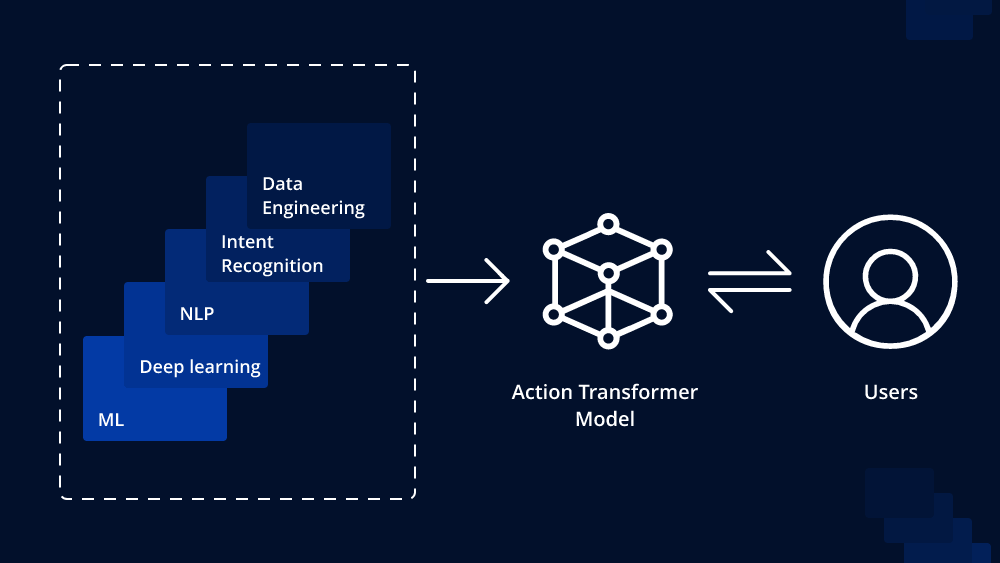
Transformers are a type of deep learning model primarily used in NLP and increasingly in computer vision. They excel at capturing long-range dependencies in sequences.
Definition
A Transformer is a neural network architecture designed to handle sequential data, using self-attention mechanisms to process input in parallel.
Types / Variants
- Encoder-only (e.g., BERT)
- Decoder-only (e.g., GPT)
- Encoder-Decoder (e.g., T5)
Key Concepts
- Self-Attention
- Multi-Head Attention
- Positional Encoding
- Feedforward Layers
- Layer Normalization
Tutorials
- Getting Started with Transformers: Your First 10 Minutes
• Build your first Transformer model in Python using Hugging Face’s pipeline—tokenize, infer, and explore outputs with minimal code.
- Implementing Transformer from Scratch
• Hands-on guide to coding positional embeddings, multi-head attention, encoder/decoder layers, and training loop in Python.
- Introduction to Transformers – PyLessons
• Learn how to implement embedding layers, self-attention, and build a basic Transformer model in TensorFlow step by step.
Videos
• Live coding demo: load a pretrained model, tokenize text, and run inference in under 40 lines with Hugging Face.
• Create a sentiment analysis classifier with NLTK VADER and Huggingface Roberta Transformers to classify Amazon reviews.
• Step by step explanation and illustrations of how Transformer neural networks work.
Applications
- Text classification (e.g., sentiment analysis)
- Machine translation
- Question answering
- Summarization
- Image generation (Vision Transformers)
Resources
Tips & Best Practices
- Start with pretrained models to save training time
- Understand positional encodings for sequence data
- Experiment with attention visualization to interpret models