Convolutional Neural Networks
Overview
Learn the fundamentals of Convolutional Neural Networks (CNNs) with step-by-step tutorials, video guides, and practical applications.
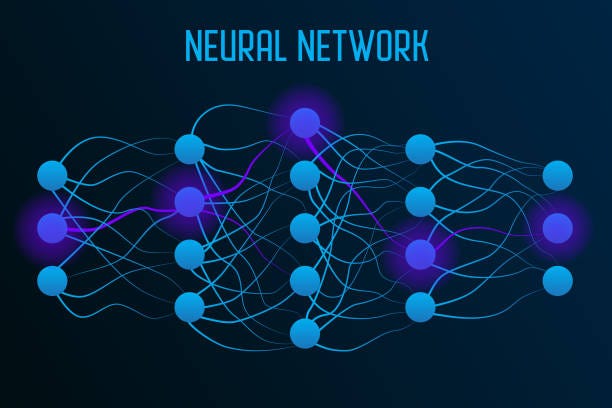
Definition
Convolutional Neural Networks (CNNs) are a class of deep learning models specifically designed for processing structured grid data, such as images. They use convolutional layers to automatically learn spatial hierarchies of features.
Types / Variants
- Sequential CNNs: Layers are stacked sequentially for simple architectures.
- Functional API CNNs: Allows building complex architectures with multiple inputs/outputs.
- Subclassed CNNs: Custom models by subclassing the Model class in frameworks like TensorFlow.
Key Concepts
- Convolutional Layers: Extract features using filters (kernels).
- Pooling Layers: Reduce spatial dimensions and computation while retaining important features.
- Fully Connected Layers: Combine extracted features to perform classification or regression.
- Activation Functions: Non-linear transformations like ReLU applied to feature maps.
- Overfitting Prevention: Use dropout, data augmentation, and regularization.
Tutorials
- Building a CNN from Scratch with Keras
• Hands-on guide to define convolution, pooling, and dense layers in Python using Keras and TensorFlow.
- Python CNN with TensorFlow Tutorial
• Walk through loading data, building, training, and evaluating a CNN in TensorFlow 2.
- Step-by-Step Guide to Build CNN Model
• Learn three approaches—Sequential, Functional API, and Subclassing—to implement a CNN on CIFAR-10.
Videos
• Live coding of a CNN in TensorFlow 2: building, training, and evaluating on MNIST.
• Step-by-step code for a CNN using Keras on CIFAR-10: model layers, training, and evaluation.
• Beginner-friendly coding session: define convolutional layers, pooling, and fully connected networks in Python.
Applications
- Image classification (e.g., MNIST digits, CIFAR-10 images).
- Object detection and localization in images.
- Medical imaging analysis (e.g., tumor detection in MRI scans).
- Self-driving cars: detecting pedestrians, traffic signs, and obstacles.
Resources
Tips & Best Practices
- Always normalize image data before feeding it into a CNN.
- Use data augmentation to improve generalization and prevent overfitting.
- Start with small models and gradually increase complexity.
- Visualize intermediate feature maps to understand what the network is learning.