Clustering
Overview
Learn the fundamentals of Clustering with step-by-step tutorials, video guides, and practical applications.
Definition
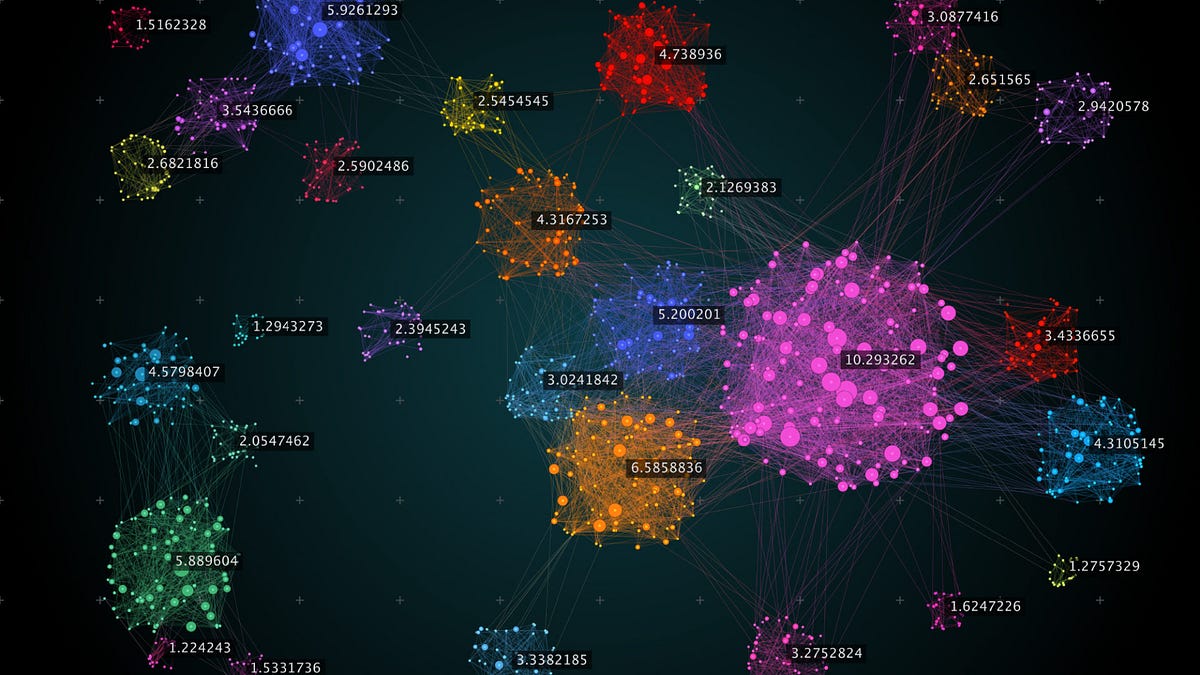
Clustering is an unsupervised learning technique used to group similar data points together based on their features, without predefined labels.
Types / Variants
- K-Means Clustering: Partitions data into k clusters using centroids.
- Hierarchical Clustering: Builds a tree of clusters using agglomerative or divisive methods.
- DBSCAN: Density-based clustering to find arbitrarily shaped clusters.
Key Concepts
- Distance Metrics: Measure similarity, e.g., Euclidean, Manhattan, Cosine.
- Centroids: Central points representing each cluster (used in K-Means).
- Linkage Methods: Determine cluster merges in hierarchical clustering (single, complete, average).
- Elbow Method: Helps determine optimal number of clusters.
- Silhouette Score: Measures how similar an object is to its cluster compared to other clusters.
Tutorials
- Performing Cluster Analysis in Python
• Walk through preprocessing, k-means, evaluation and interpretation with the Mall Customers dataset.
- K-Means Clustering Simplified in Python
• Understand k-means steps, the elbow method, and implementation using scikit-learn.
- Clustering Workflow
• Explore data preparation, similarity metrics, running algorithms, and interpreting results.
Videos
• Step-by-step coding of k-means clustering using scikit-learn on a real dataset.
• Beginner guide to coding agglomerative and divisive hierarchical clustering in Python.
• Hands-on implementation of K Means Clustering using scikit-learn for beginners.
Applications
- Customer segmentation for marketing.
- Image segmentation and pattern recognition.
- Anomaly detection in fraud detection or network security.
- Grouping similar documents or articles for recommendation systems.
Resources
Tips & Best Practices
- Scale features before applying distance-based clustering algorithms like K-Means.
- Visualize clusters using 2D/3D plots or dimensionality reduction techniques like PCA.
- Try multiple algorithms to see which fits your data best.
- Use silhouette score or elbow method to determine the optimal number of clusters.